Breeding Journal DataSheet for Elacatinus multifaciatus
General Species:
Elacatinus multifaciatus Social Structure: Forms Pairs
Size of Individuals: Over 1", male larger.
Age of Individuals: Unknown, but certainly less than 1 year when purchased as CB juveniles
Date added to Tank: 12/15/2005
Broodstock Tank Details Size of Tank: 24 gallon nanocube
Substrate Details: live sand
Filtration Details: stock filtration + Remora C Skimmer
Water Changes: generally weekly, 25%
Water Temperature: 78-80F
Lighting: metal halide with PC Actinic supplementation (later on, different fixture without actinics)
Lighting Cycle: 12 hours, on timer
Other Tank Inhabitants: too many to mention over the course of their lives, but included Mandarins (Synchiropus splendidus), 3 species of cardinalfish, firefish, clownfish etc...
Broodstock Feeding Details Food Types: Mainly they ate frozen brine and mysis shrimp, cyclopeeze, and when they were large enough they even tooks small pellet foods
Feeding Schedule: multiple times per day
Spawning Details Date of First Spawn: unknown, as spawns occured out of sight and were never observable - first hatch ever to occur was only 1/23/2006, less than 2 months after the pair was added to the tank...
Spawn Time of Day: unknown
Dates of Consecutive Spawns: suspected to be almost weekly
CourtShip Details: unknown - occured in secret
Egg Size: unknown
Egg Color: unknown
Egg Count: easily 100+ given the numbers of larvae I could collect.
Hatch Details Hatch Date: for my successful run, 11/1/2006
Hatch Time of Day: 10:00 AM
# Days after Spawn: unknown - spawns were never observed, so no way to tell.
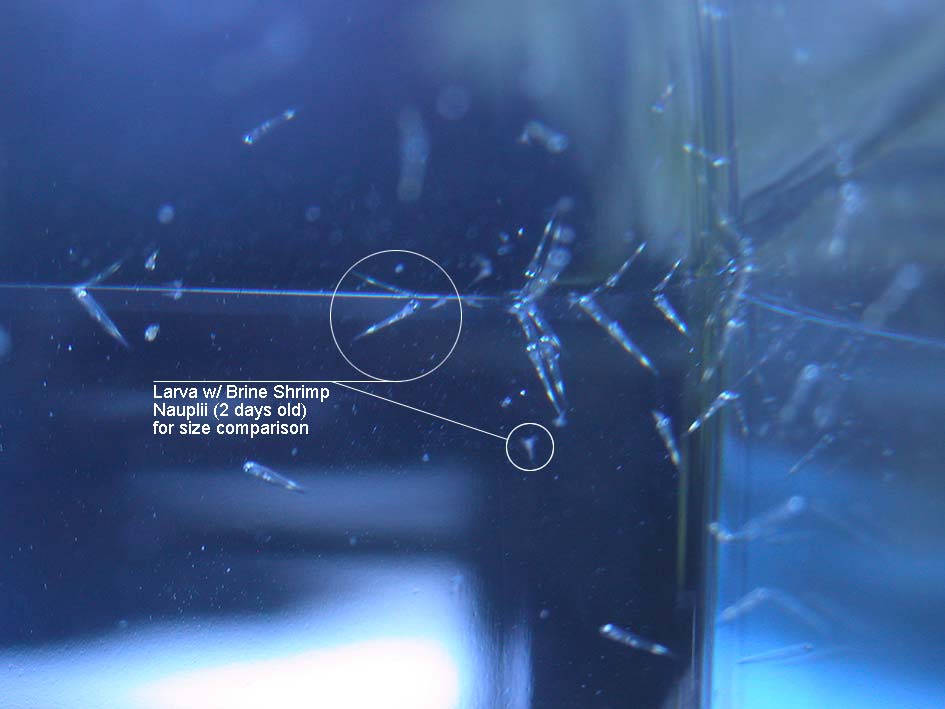
Larve Description: Newly hatched larvae are small but have mouth, eyes, gut etc. At the time, I didn't have really good measuring tools available, so I described them as approximately 1/8" in length.
Larval Tank Details Temperature: probably around 80F
Size of Larval Tank: 10 gallons
Substrate Details: none
Other Tank Decor: none - tank was blacked out on all sides
Filtration Details: none, used greenwater technique
Lighting: stock 18" strip light
Lighting Cycle: probably 18 hours on
Water Changes: as needed, probably infrequently more so to allow for more phyto than anything else...
Larval Feeding Details Food Types: SS Rotifers, copepod nauplii, and baby brine shrimp
Feeding Schedule: rotifers using greenwater technique with T-ISO being critical according to other breeders, also used Nanno and Tet. Copepods came into play later on (around 2 weeks) as did baby brine shrimp (enriched with selcon).
Metamorphosis/Settlement Date of Settlement Start: 11/28/2006
Days after Hatch: 27 to 36 days post hatch for settlement to occur
Date of Settlement End: 12/7/2006
Description of Fry: Babies start "sucking" onto the tank surface with their ventral-fin-disc. Adult coloration comes in over the next 24 hours or so, right around 1 CM at settlement
Grow-Out Tank Details Temperature: 80F
Size of Grow-Out Tank: 10 gallon
Substrate Details: none
Other Tank Decor: added some red gracilaria
Filtration Details: when the juveniles were large enough, I added a duetto internal filter
Lighting: stock 18" strip light
Lighting Cycle: Probably 12-14 hours on
Water Changes: as needed, probably 25-50% a week on average
Size at Transfer: did not move
Age at Transfer: did not move
Grow-Out Feeding Details Food Types: shortly after settlement, got feeding responses with Cyclopeze and Cyclops. Otohime came in later.
Feeding Schedule: multiple times per day, always making sure they stay fat.
Additional Information Miscellaneous Information:
This project originally documented oh Reef Central at http://www.reefcentral.co...s=&threadid=844416 I didn't know this when I started, but I later learned that Greenbanded Gobies are sequential hermaphrodites, so provided you get two juveniles, you should easily get a pair. The pair didn't get along for about the first month they were together. The male in my pair was certainly larger, and when he finally died he was over 2" in length (monstrous for this species). The male had an elongated spine on the first dorsal fin. Our female did not have that.
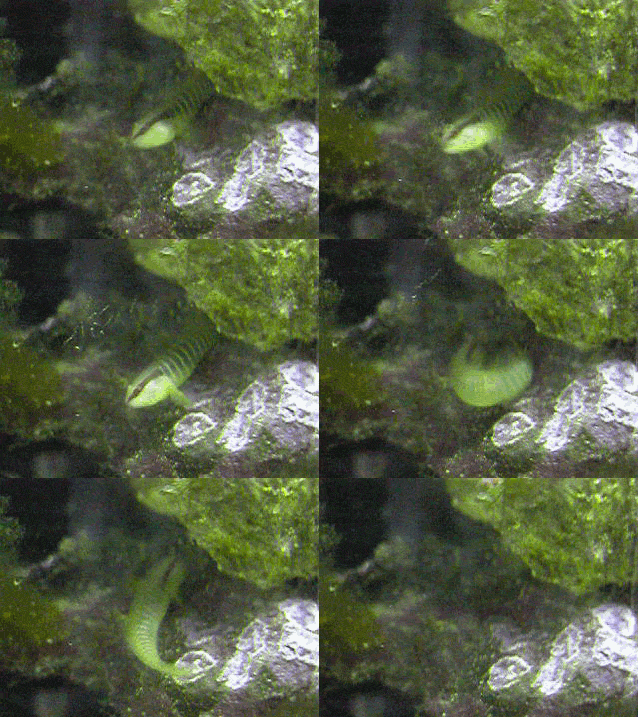
It should be noted also that this species seems to hatch shortly after the lights COME ON...a morning hatcher. I thought this might be a fluke, but at least one other person who is spawning these fish has reported the same. Interestingly, the babies are attracted to the color blue - i.e. blue silicone air tubing, or the blue frame of a net breeder, both attracted the larvae at hatch.
Images: Eggs in the cave - this is the best look I could ever get at them... 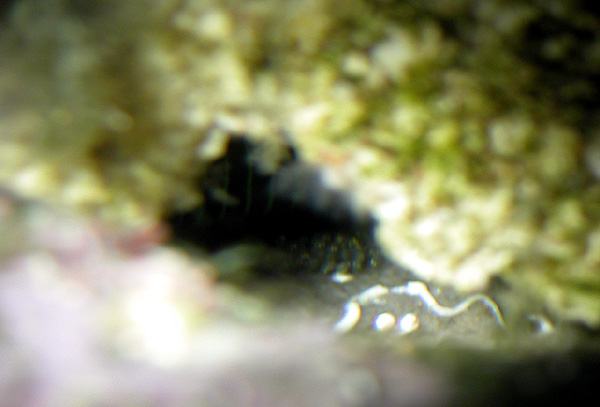 Animated GIF showing male hatching babies during the morning
  Newly Hatched "GBG"
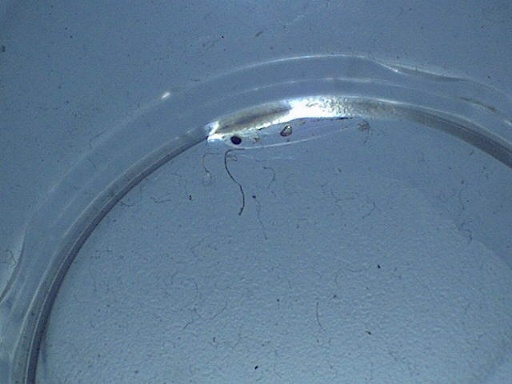
  15.6 days post hatch, approximately 6 mm, at 10X magnification
  19 days+, approximately 7 mm at 10X
 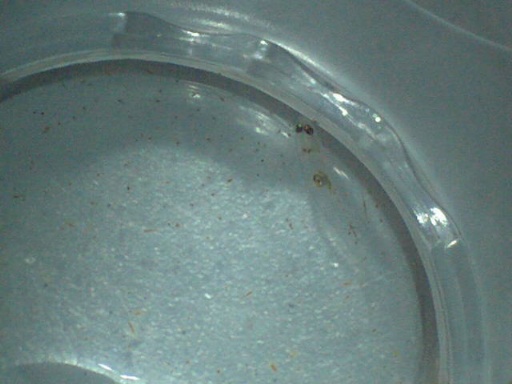 Newly settled Greenbanded Goby at 27.5 days post hatch
 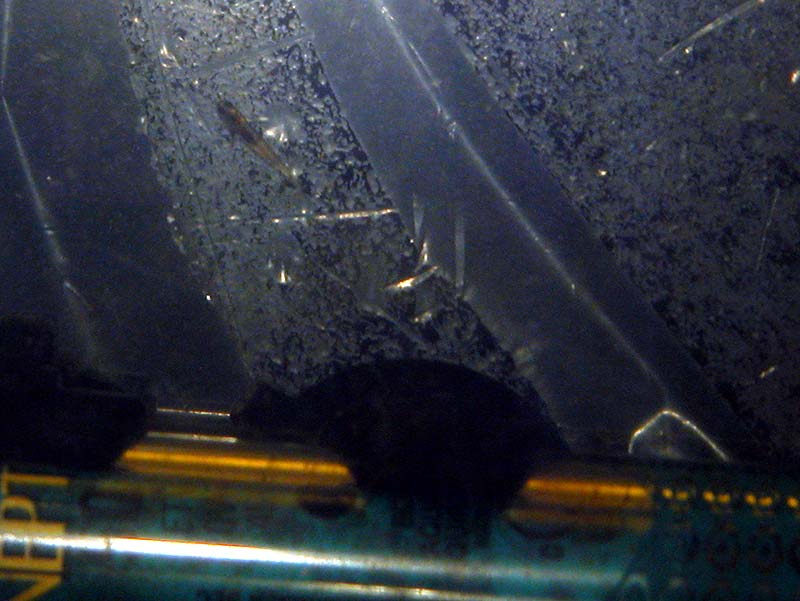 28 days post hatch, the first one showing adult coloration at 10-11 mm
 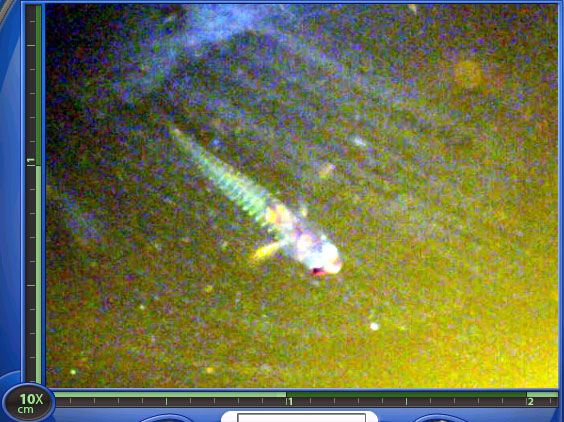 33.5 days post hatch, only 2 larvae remain unsettled, the rest are all miniature adults. This is a 10 gallon tank for reference
 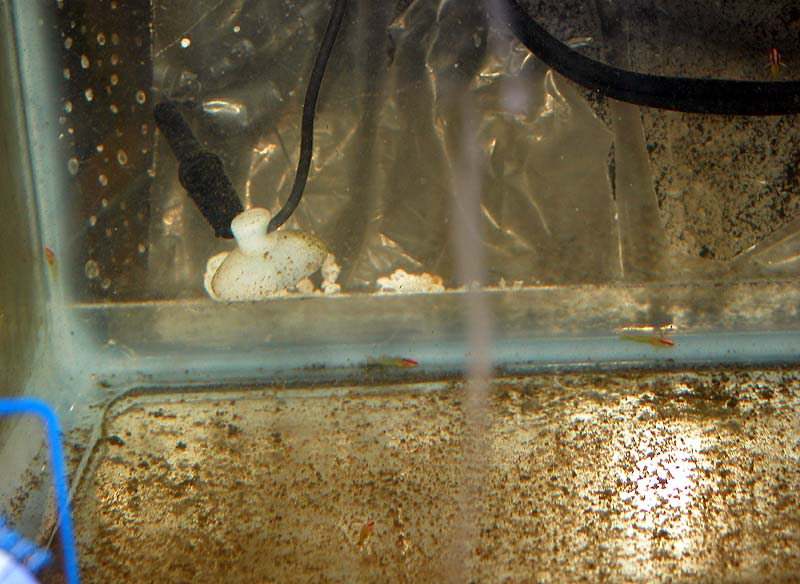 36 days, with only one unsettled.
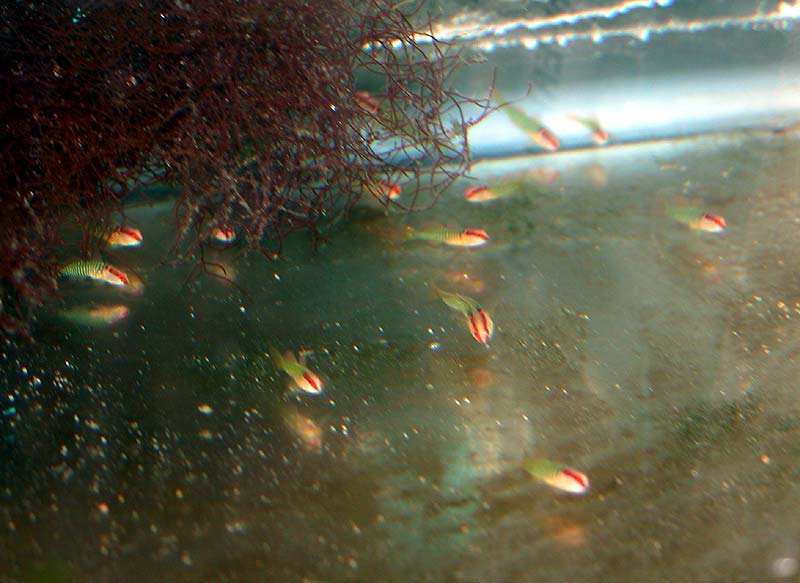
 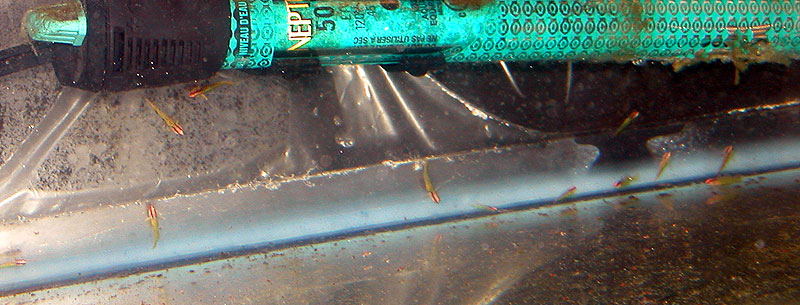 50+ days...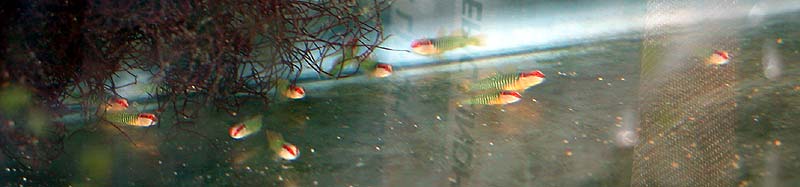
 66+ days post hatch, in with 30 day old Onyx Percs (Amphiprion percula)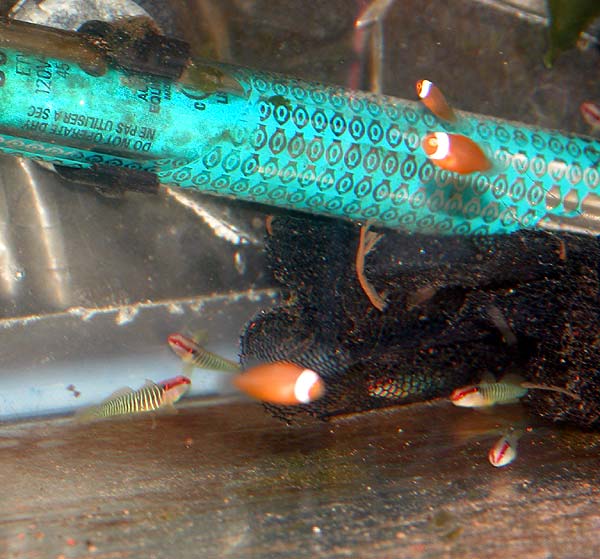
I stopped keeping notes after 70 days, and eventually sold off all but a couple babies I reserved for myself, which sadly disappeared when introduced into my reef tanks. This seemed to be the fate of MOST of the babies I sold off...being such a small goby, many folks would add them into large reefs and never see them again, or they'd see them only months later.